Showing posts with label review. Show all posts

Thursday, 19 September 2013

Review : Scalescenes Coaling Stage (R026) - Comparison with Metcalfe, Hornby and Ratio.

The new Scalescenes Coaling Stage wasn't what I expected when I received the advance email showing the design. I was expecting something far less grand and complete at the sub-5 GBP price point.

The detail is as accurate as we've come to expect from Scalescenes, both inside and out, and is suitably grimy in the right places. It could have benefited from a more weathered look, but that is easily applied with a wash-n-fix with appropriate products.

Of course, it can be printed as OO or N, and comes in several brick finishes.

As is becoming more frequent with these kits, there are also etched windows available from Brassworks, which add to the price, but can make all the difference, especially if, like me, you're a bit clumsy cutting out the window frames!

A final note - for all of you building modern image layouts, and who want to include a deserted, dilapidated, almost ruined coaling stage, this would be an excellent starting point. With the addition of a few boarded up windows, removal of the staircase, and some weeds to add texture, it could be made to look thoroughly tumble-down.

So, either as an in-use, or an ex-use coaling stage, this is a good model; as usual you need to have the patience to either layer up cereal box card, or buy thick card (thereby increasing the price), but the advantages are in the quality, appearance, and size of this kit.

There are alternatives, from Metcalfe, Ratio, Hornby, and Scenecraft, among others, but they just don't look as good.
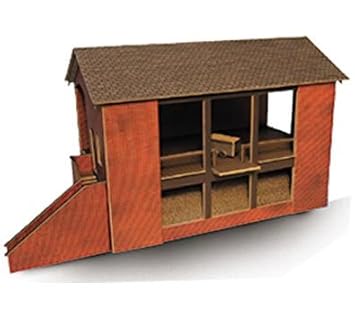
For example, this is the Metcalfe coaling stage.

It is less complete, and looks a bit basic next to the Scalescenes model pictured above. However, if you don't have a decent printer, and want something pre-printed with the correct colors, and which will also probably be the same coloring as other Metcalfe kits already on your layout, it's a good alternative.

On the plastic kit side, and for those who have a smaller layout, with less available space, Ratio's coaling stage looks realistic.

I'm not sure exactly which era it fits into, but the lack of a building would suggest a reasonably early timescale.

On a similar note, and for those who like red-brick, Hornby also have a reduced size coaling stage, pictured below.

Again, it's basic, but realistic enough to include on most layouts, provided that it is suitably weathered and filled with a coal look-alike to add realism.


All of the products featured here can be found by a simple search on Amazon, or a similar search on eBay.

The eBay product list contains pictures taken by real people of the products on their layouts, which are often a good way to see how they might actually look, so I'd recommend starting there, even if you return to Amazon to buy the actual product.


As always you can use the comment feature to start a conversation with other readers, or simply use the feedback form to email me your thoughts.

Tuesday, 17 September 2013

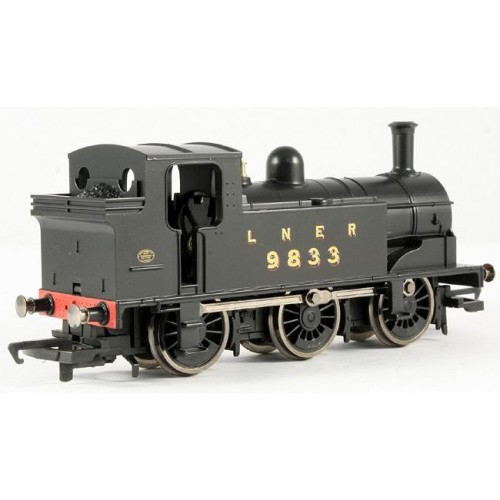
Review of the Hornby R3120X LNER J83 00 Gauge DCC Fitted Steam Locomotive

The R3120X is a Railroad model. It bears stating up front, just so you realise that the price tag will probably reflect the build quality. Usually, Railroad also means D-ring couplings moulded onto a Lima style chassis.

In this case, I was mislead slightly by the Amazon description, which indicates that it has NEM pockets. If this is the case, then they've hidden them well.

I'd err on the side of caution and say that, from the picture below, these are moulded Lima style D-ring couplers, rather than NEM couplings as listed. (If anyone knows differently, please let me know in the comments section!)
(Thanks to Papamallard for the picture)

Still, it is a handsome J83, at a reasonable price.If you can get it for the 40 - 50 GBP range, including delivery, that is. So, what makes it such a good deal?

For a start, it has DCC fitted. This is a little odd, since as a Railroad model, with D-ring couplings, it is going to most likely find itself on an analogue layout (I would think) rather than a DCC one. And, curiously, that's it's value - it's a great price for a DCC fitted model.

So, where does it fit in on your layout?

Briefly, the J83's were made at the turn of the last century, and lived on through the grouping changes into BR ownership proper. The last J83 was removed from service in the early 1960s.

They were generally used for shunting and short haul of goods. In fact, they were used for mineral trip workings and goods transfer up until 1909. Hornby also sell, in their Railroad range, a pack of three 12T mineral wagons, which would be a good place to start, if creating a layout around this loco.

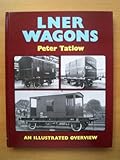
There's also a book by Peter Tatlow, which I've not been able to find new, but which is available second hand, and which covers all the various wagon types that might have been seen behind the J83.

Bachmann do some interesting wagons, such as fish vans, in LNER livery, in the correct era, which would have made sense in and around the Scottish coast. Fitting them would require a change in coupling, of course.

Bachmann also do a 45 ton Bogie Well Wagon, in LNER livery, with a boiler, which could feasibly have been seen being shunted around by a J83 at this time.

Another option is to look at the shed history, post 1930, of these locos. Into the 1930s, they were allocated to sheds (for shunting duties) from which they would, generally, retire.

LNER 9833 was allocated to shed 65A, Eastfield, near Glasgow. Eastfield itself has had a turbulent history, having been destroyed by fire in 1919, used to service up to 200 steam locos after the rebuild, was subsequently closed in 1966, only to re-open in 2004 as a TMD.

If we place 9833 at  Eastfield following the fire and rebuild, then a few options come to mind, including shunting around locos that have come in for repair, or for shunting things like the aforementioned LNER bogie plus boiler.

Hopefully that sparks a few likely scenarios, and provides food for thought for what is a well priced, small loco with an interesting history.

(Thanks to LNER.info, and RailUK, among others, for the information.)